Insights
From the individual to the institution: Reflections on building a law firm for the future
August 17, 2026There is a stage in every professional journey when success is measured by what one can accomplish personally. You build expertise, earn the trust of clients and colleagues, and take pride in solving difficult problems yourself. Early in a career, the individual is naturally the unit of achievement.

But building an enduring institution requires a different mindset.
At some point, the question is no longer, “How much can I accomplish?” It becomes, “What can we build together that will endure long after any one of us has moved on?”
Read More+
That transition—from thinking individually to thinking institutionally—is one of the most important transformations in professional life.
From being indispensable to building capability:
The legal profession rewards individual excellence. Clients want the lawyer they trust, and difficult matters gravitate towards those with experience and judgment.
Yet the paradox of leadership is that an institution becomes stronger when its leaders become less indispensable.
Stepping back can be difficult. Delegation may feel like relinquishing control, and younger colleagues may approach problems differently. But an institution cannot be built on the premise that one generation will always have the answers.
The real test of leadership is not whether people continue to come to you for answers, but whether you have developed people capable of finding the answers themselves.
At Shardul Amarchand Mangaldas, our ambition has always been larger than building a collection of successful individual lawyers. It is to build an institution whose values, standards, culture and commitment to clients are stronger than any individual personality.
Adapting without losing identity:
The legal profession is changing rapidly. India’s economy has evolved, businesses have become more complex and global, technology is transforming legal work, and clients expect greater speed, commercial understanding and collaboration.
In uncertain times, the instinct can be to protect what already exists. But institutions that merely preserve themselves eventually become disconnected from the world around them.
Enduring institutions adapt without losing their identity:
Integrity, professional excellence, independence, client service, collegiality and respect for the law are foundations. They should endure. But how those values are expressed must evolve.
The firm that succeeds in the next decade will understand both what must remain constant and what must continuously change.
Building the next generation:
Ultimately, the measure of an institution is not the generation that built it, but the generation that follows.
Mentoring is therefore a central responsibility of leadership. And good mentoring is not about creating younger versions of ourselves. It is about giving talented people the confidence to become themselves.
Young lawyers bring different experiences and perspectives. They are technologically fluent, globally connected and willing to question established ways of working. This should be seen not as a challenge to authority, but as an institutional asset.
Our responsibility as senior lawyers is to transfer context, judgment and perspective—and to give younger colleagues real responsibility. A person cannot learn to lead if they are never allowed to lead.
Succession is not about replacing one individual with another. It is about creating many capable people who can carry the institution forward.
It also means accepting that the next generation will change what it inherits. The objective should not be to leave behind a monument to a particular generation, but a living institution capable of evolving.
The measure of leadership:
If I were to offer younger lawyers a few lessons, they would be simple: build judgment, not merely a résumé; understand your client’s world; do not confuse visibility with value; learn from people different from you; give credit generously; and think beyond your own career.
Above all, remain grounded in principle while being willing to learn and change.
Early in a career, we ask: What can I achieve?
Later, we ask: What can we achieve?
Eventually, the question becomes: What can we build that will continue to create value when we are no longer here?
That is the real test of institutional leadership.
The greatest privilege of leadership is not to be remembered as the person who built everything. It is to know that you helped build something that no longer depends upon you.
That is when an institution truly belongs to the generations that follow.
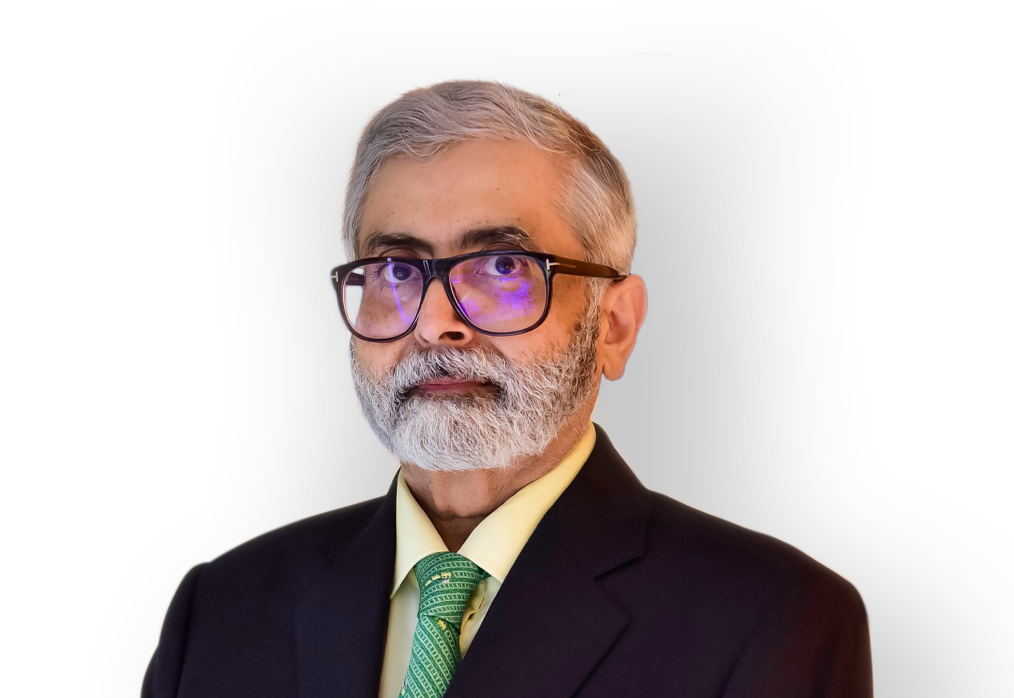
This article was originally published in Outlook on 17 August 2026 Written by: Dr Shardul S. Shroff, Executive Chairman. Click here for original article
Read Less-
Disclaimer
This is intended for general information purposes only. The views and opinions expressed in this article are those of the author/authors and does not necessarily reflect the views of the firm.