Insights
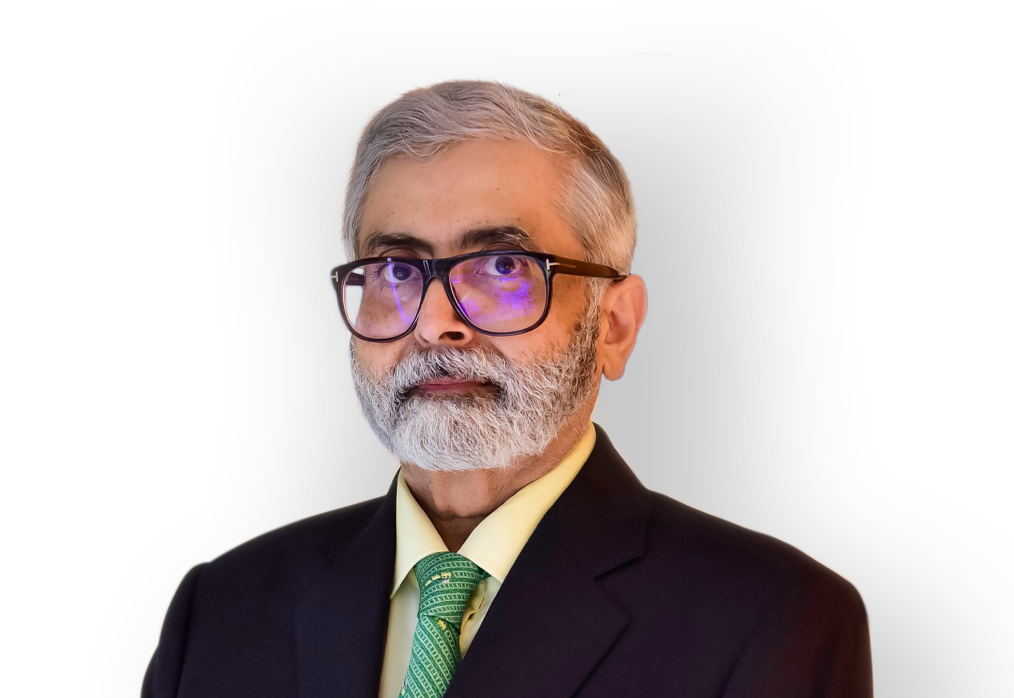
Building a firm that outlasts individuals: Dr. Shardul S. Shroff on leadership, change, and institution-building
May 28, 20262015 was a defining inflection point for the firm. When you look back, what were the core principles that guided you in rebuilding and reimagining the institution?
For us, it was a new dawn — the firm was ours to build.
The principles were clear from the very first day. First, complete dedication to the firm — not as a personal vehicle but as an enduring institution. Second, an unwavering focus on excellence — in the quality of advice, in the calibre of people, and in the standard of service. Third, better governance — the belief that process was as important as outcome and that building transparent systems would sustain us far beyond any individual’s tenure.

Our name besides having a 100-year legacy had certain auspicious characteristics in its name (“Amar” — the everlasting; “Mangal” — the auspicious; “Das” — service to a higher purpose), and we needed to derive inspiration from these words. They represented our parents’ philosophy and vision to build a multi-city practice at a time when no other Indian firm had contemplated it.
Read More+
When we began, we were effectively a startup with a century-old legacy. We had roughly 300 people, four functioning offices, no Mumbai presence, and the challenge of integrating legacy staff with ambitious new lateral hires. I personally guaranteed the first year’s payments to every member who continued or joined us. The spirit that carried us through was one of camaraderie, shared risk, and the conviction that together we could build something greater than what had come before.
We chose our brand colours deliberately — Prussian blue representing royalty and burnt gold for the gold standard of the profession that we would establish. That attention to symbolism reflected a deeper truth: we were not merely rebuilding; we were scripting a new future.
You have often spoken about building an institution rather than a personality-driven firm. What does institution-building mean in a profession that is still deeply relationship-led?
This question goes to the heart of what distinguishes sustainable firms from transient ones. When we started, the market’s expectation was clear — many assumed we would remain a family-driven practice, dependent on a few senior names. We were determined to prove otherwise. We have proved this factually as out of a firm of 1000 practicing lawyers, we are merely 5 family members.
Institution-building, as we understand it, means creating systems, values, and culture that endures beyond any individual. We invested early in governance — a nine-member management board, a new evaluation framework with five distinct criteria for holistic evaluation of our members, and committees for partner selection, and for other strategic decisions.
We had made a cardinal error in evaluating our professional lawyers purely on money earned as recovery. With accretion to professional lawyers it created an atmosphere of pernicious toxicity.
Critically, our partnership evaluation deliberately moved beyond just financial performance. We assessed technical expertise, people development, firm building, and culture, besides financial and business performance — the softer dimensions of leadership that build an institution’s character over time. We believe we are perhaps the only firm which has introduced a broad-based evaluation system for ourselves.
We have now also professionalised the firm’s management by bringing in non-lawyer specialists in operations, innovation, AI, and many other important business verticals with the idea that lawyers must focus on law; the management of the firm must be entrusted to those skilled in management. I am proud to share that we have experts from fields of operations, management consulting, finance, IT, knowledge management, learning & development, corporate communication, research & academia, journalism, media and other creative spaces to ensure we deliver our services to our clients in the best possible manner keeping in step with new-age businesses and global advancements.
But institutions are not built on processes alone. They require a culture of genuine collaboration. Our philosophy has been simple: we are one partnership, one balance sheet, and one profit-and-loss account pan-India. The right person goes before the client, regardless of which office they sit in. We have people who have been with us for 20, 25, and even 30 years — that loyalty is not to individuals but to the institution itself.
Over the past decade, the firm has expanded both in scale and specialisation. What have been the key strategic pivots that defined this growth?
The first and most consequential pivot was building Mumbai from nothing. When we started, we did not have a single employee in Mumbai. We opened our doors to recruitment of teams and practices that we needed to undertake in Mumbai. We single mindedly scanned South Mumbai for appropriate premises with the capability of expansion and found Express Towers to be the best in class. We hunted around for a suitable Managing Partner with a book of business, and we were fortunate to get Mr. Akshay Chudasama as a lateral Joint Managing Partner, alongside Ms. Pallavi S. Shroff, to paint on a blank canvas subject to certain discipline, rules, and regulations, which were inalienable to our culture. Within ten years, the Mumbai office grew to more than 350 members and became market-leading across corporate, capital markets, litigation, and regulatory practices.
The second pivot was disciplined practice-area expansion. I follow a personal rule: every two years, replenish at least two practices or start two new ones. In 2016, the IBC came into force, and we built a team expanding from three people to more than fifty members. We did the same with real estate after RERA, with data protection after the new privacy regime, with TMT under dedicated leadership
, and most recently with artificial intelligence and ESG. Some of these are work in progress.
The third pivot was our response to COVID, which accelerated two transformations: the embrace of technology culminating in the firm-wide rollout of Harvey AI and the institutionalisation of mental wellness and diversity programmes that fundamentally changed our workplace culture and practices.
The fourth phase involved deliberate introspection and a governance transformation guided by BCG — professionalising our management, broadening our evaluation criteria, and setting the stage for a firm that can scale beyond the founding generation. I made the personal sacrifice of my salary as an Executive Chairman at the Firm and waived and surrendered this for the benefit of the Firm.
These steps helped in accelerating growth of the firm in a dynamic manner.
How do you decide which emerging practice areas to invest in, especially in a rapidly evolving regulatory environment?
Emerging practices have two inherent criteria. We identify a regulatory shift, develop deep policy expertise, convert that into doctrinal understanding, and then build the commercial practice around it.
The second principle for emerging practice is where regulations are already in place but adjustment to a new law is an on-going process. Here we act to identify the regulatory shift required along with the growth and training of people in the new law. Finding the right talent to become an acknowledged leader in that space is vital. We have to see how the practice serves our existing client base, enables us to service a larger bank of clients and reinforces our broader market position. Every practice is undergoing a change, and it is in identifying such change and the nuances thereof that our outstanding presence is fulfilled.
Ethical processes of growth, not founded in poaching talent from other firms is a fundamental cultural value. Our aim is about growing in depth, increasing the breadth of our knowledge , and reaching the heights of our profession to become trusted advisors of domestic and international clients.
Law firms today are far more embedded in business strategy than ever before. How should firms adapt to this shift from traditional advisory to becoming a strategic partner?
We recognize that the professional services rendered to a burgeoning list of domestic and international clients must have a multi practice approach. We have to be creative, forward-looking and in the business of solutions. We cannot be the bottleneck for industry.
For this purpose, our ethos has to transcend beyond mere interpreters of the statute or contract of our times. We have to be flexible, imaginative and thinking ahead. We have to be creative and prepare solutions. Whilst we are trusted advisors, as a strategic go-to-firm, we have to think more than the letter of the law. We have to build our expertise alongside industry expertise. If we practice Banking & Finance, we have to keep with the times and understand all nuances concerning Fintech, Cyber Currency, Blockchain deals. If we are practicing in aviation, we must understand fleet economics and the dynamically expanding regulations to keep pace with modern dimensions of growth.
We need to invest in state-of-the-art technology on best commercial terms. Our technology has to work for our clients, and we have to become innovators for newer methods and techniques. We have to eliminate wastage and learn to be extraordinarily fast in our turnaround times. Investment in modern, globally benchmarked standards is essential to executing routine processes with the speed and sophistication required by today’s business environment. This includes the adoption of legal technology, AI tools, ISO 27001:2022 certification for data security and protection, appointment of business support teams relevant in the business of law, to be best in class and the most reliable, scrupulously clean practice in the profession.
The practice of law has evolved around long term relationships and friendships. Transactional practice is not long term as it finishes with the transaction. We must have a long perspective, dig deeper in the field of knowledge and relationships. We have to be disciplined in the practice of law, minimize the older techniques of filibustering that procedurally delay outcomes, pioneer new laws, and grow new practices to be a successful leader.
As you complete 11 years in this new chapter, what does success look like for the firm over the next decade?
Change is a constant, and success is a derivative of change. In an era shaped by the convergence of science and law, success is no longer static, but a fluid outcome arrived at through a radically different process.
Let’s take a moment to contextualise this. With evolving times, the change in the law is established in shorter time frames. For instance, the plethora of software/AI tools in the marketplace is to be seen to be believed. Still, we have to overcome the issues of machine hallucination in order to get a perfect draft that is reliable. Therefore, machine learning and evolution of the language of the law accommodating for the new technology will be the need of the times.
Also, expansion of the means of production, like the times of Charles Dickens, creates wastage, pollutes simultaneously and we have to find solutions for a perfect working environment. Consequently, the study of environment law, sustainability and governance relating to such norms assume great importance considering the time bound standards and deadlines before us, and before we destroy the world in wars or by being profligate in the way we spend our natural resources. We have to find the balance for clean and sustainable living. This will be the biggest challenge for humanity not just for the next decade but in the next 30 years and laws will need to emerge to create a steady and strong measure for this purpose. Law has to be the backbone in building such new structures and in maintaining the awe and rigour in the enforcement of law. Our rapid growth has sacrificed the enforceability of our laws and growth must enable our societies to develop newer structures without the overhang of criminal law for enforcement.
As for us:
If, ten years from now, clients say “They stood by us when it mattered,” if young partners say, “I was trusted early and developed responsibly,” and if the market says, “That firm quietly shaped the new era of the profession,” then we would have succeeded.
This is the standard we will hold our future generations to in the coming years.
This article was originally published in BW Legal World on 28 May 2026 Written by: Dr. Shardul S. Shroff, Executive Chairman. Click here for original article
Read Less-
Disclaimer
This is intended for general information purposes only. The views and opinions expressed in this article are those of the author/authors and does not necessarily reflect the views of the firm.